
The Story of Robert H. Starr
40 years of designing, building, testing and flying the World’s Smallest Piloted Airplanes
Wikipedia
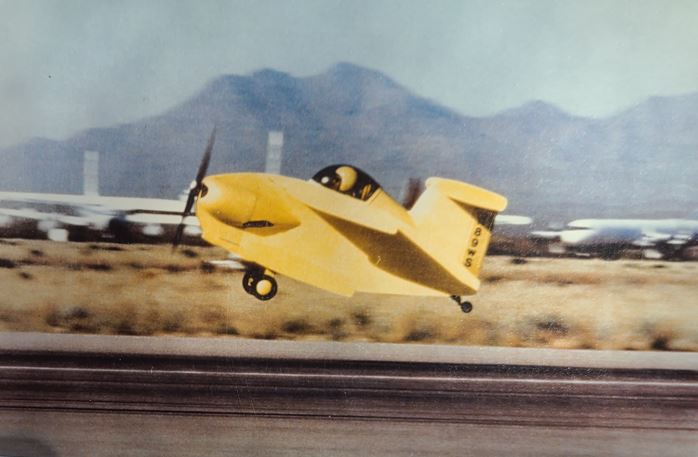
When it comes to thinking small in a very big way, Robert H. Starr set the gold standard. He designed, built, and was the only one to fly the Bumble Bee II, a fully functional biplane engineered to push the limits of aerodynamic miniaturization.
Despite its compact dimensions, the aircraft incorporated serious aerodynamic planning – careful weight control, optimized lift surfaces, and sufficient power-to-weight ratio to achieve stable, sustained flight. This was not a novelty model, but a rigorously designed, piloted aircraft.
In 1985, Guinness World Records officially recognized the Bumble Bee II as the world’s smallest piloted biplane. Remarkably, the record established during that flight still stands as of 2026 – clear evidence that sometimes the biggest achievements in aviation come in the smallest possible packages.
Pima Air and Space Museum
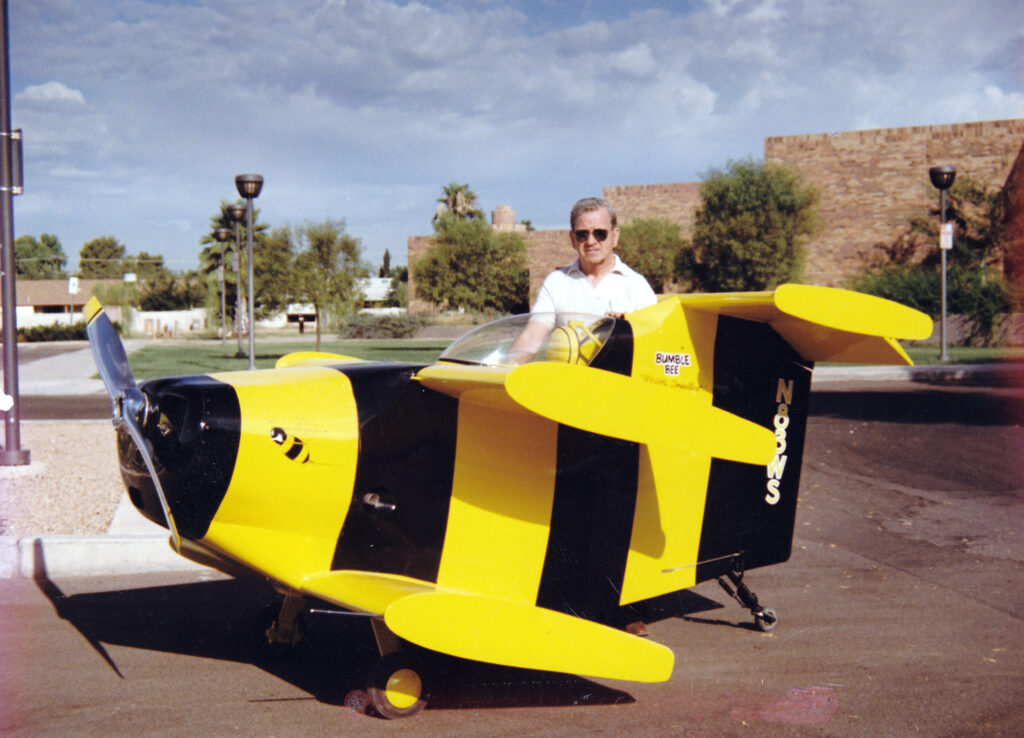
The Bumble Bee was engineered specifically to achieve the record for the world’s smallest piloted aircraft. Its designer and pilot, Robert H. Starr, previously contributed to two earlier record-holding small aircraft projects beginning in 1949. For his final record attempts, he worked independently. The original aircraft was later transferred to the Pima Air & Space Museum in 1990, where it remains on public display. The Bumble Bee II is recognized by Guinness World Records as the current title holder as of 2026.
YouTube Channel

In the 1950s, Robert H. Starr contributed significantly to two pioneering ultra-compact aircraft projects. He was the only pilot to successfully fly the Stits SA-2A Sky Baby, and the older project called “JR”, demonstrating his skills and the planes interesting controllability. In 1954, he served as co-builder and pilot of the Sky Baby, which further advanced structural miniaturization and high power-to-weight design concepts.
Through these projects, Starr gained substantial technical insight into aerodynamic efficiency, weight reduction, and control authority in extremely small airframes. Concluding that an even smaller and more aerodynamically refined aircraft was feasible, he pursued an independent design effort following professional disagreements with his then partner, Ray Stits, regarding credit for earlier work and being the only pilot on the projects. His subsequent record-setting aircraft, the Bumble Bee I and Bumble Bee II, were the direct outcome of that initiative.
Contact US
Our Hours
Monday – Friday: 7am – 8pm MST
