Winning the Race
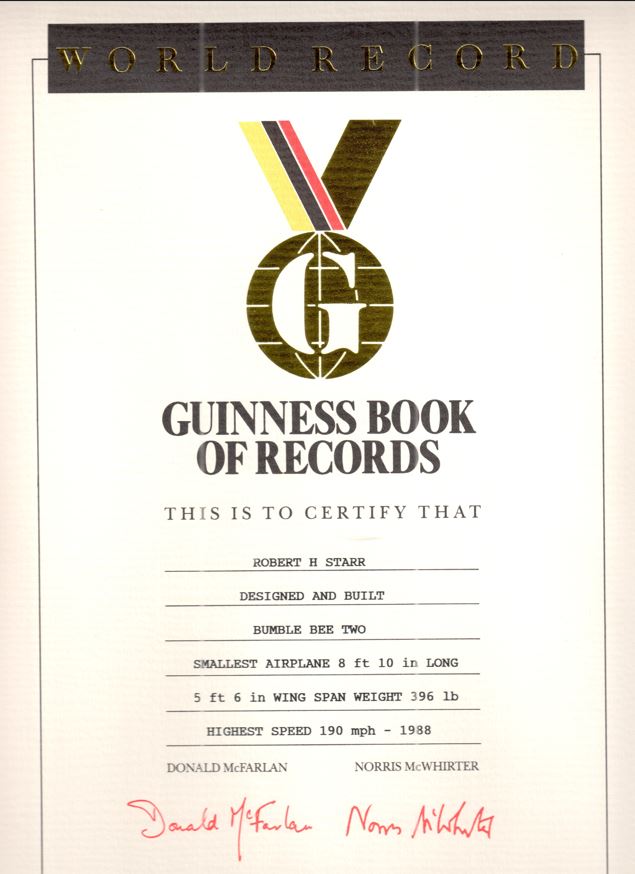
The Guinness Book World’s Smallest Piloted Airplane Competition For The Record
Sky Baby in 1950
Around 1950, Robert H. Starr met a determined builder with a tiny airplane called the Stits SA-1 Junior—nicknamed “JR” and proudly labeled the “World’s Smallest.” The catch? No one could seem to fly it without bending something expensive. It needed a steady hand and a cool head. Starr climbed in, took it up, and brought it back in one piece – becoming the only pilot to successfully fly it and land it in one piece.
Soon afterward, he moved his family to California, working as an aircraft mechanic for Northrop and Lockheed by day. In his spare time, he sharpened his flying skills crop dusting, low-level, high-focus flying that leaves little room for error.
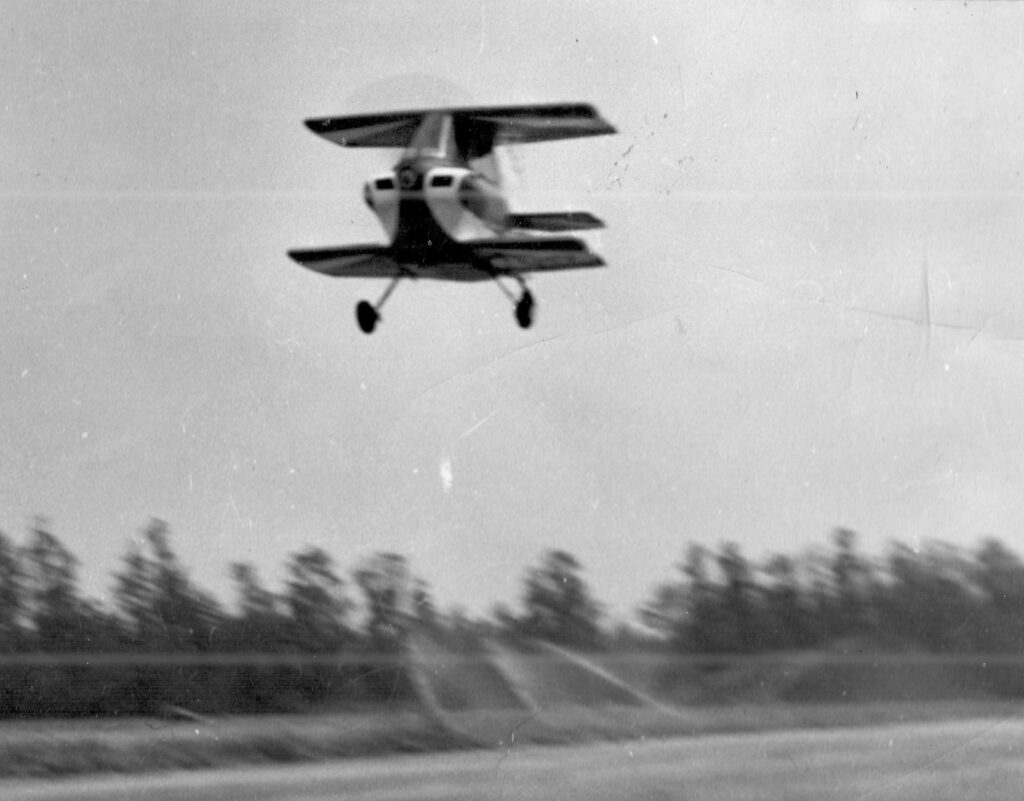
That experience carried into his next adventure: co-building and test flying the Sky Baby with Ray Stits. Officially recognized as the world’s smallest airplane of its time, Sky Baby was compact, powerful, and anything but easy to handle. Starr flew it at the 1952 Detroit Air Show, where crowds watched in amazement as the tiny machine thundered overhead.
But while the airplane drew headlines, Starr’s role often did not. As recognition leaned heavily toward his partner, frustration grew. Starr knew he understood these miniature aircraft inside and out – their balance, their drag, their limits. More importantly, he knew he could build one even better.
So he stepped away, determined to design and fly a smaller, more aerodynamically refined aircraft under his own name. The partnership ended. The ambition intensified. The race for the world’s smallest airplane was no longer shared. Now it was personal. And Starr was all in, full throttle.
Bumble Bees 1984 – 1986
In 1955, Robert H. Starr moved his family to Tempe, Arizona – but he also carried a very specific dream with him: build the smallest airplane the world had ever seen. Having flown both the Stits SA-1 Junior and the Sky Baby, he understood exactly where ounces could be trimmed and drag could be reduced. Lighter structure. Cleaner lines. Smarter aerodynamics.
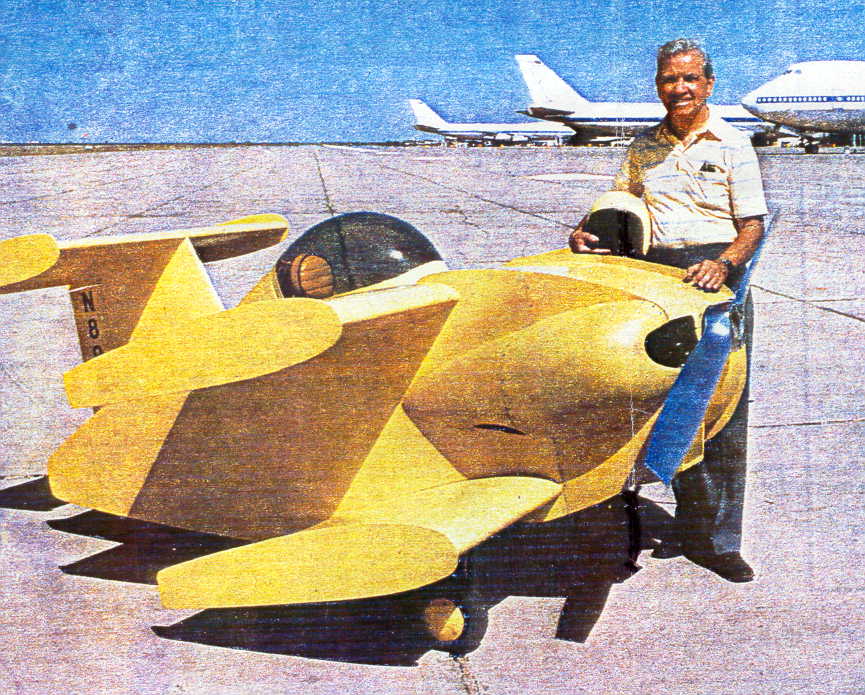
For years, the idea simmered. Then in 1980 – twenty-five years later – he finally began construction in his Tempe workshop. With a grin and a nod to Lockheed’s legendary Lockheed Skunk Works, he nicknamed his modest shop “the Skunk Works.” The new aircraft became the Bumble Bee I – tiny, bright, and built to win.
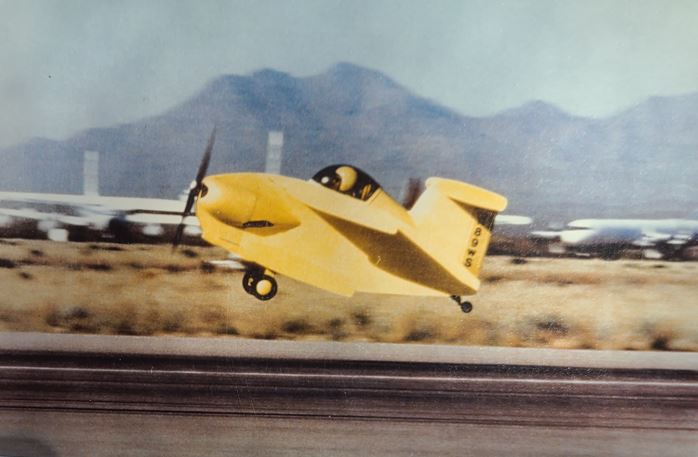
After extensive testing, Starr flew Bumble Bee I for the world record in 1984. It was demanding and sensitive on the controls – but at 60 years old, he proved he still had the precision and nerve.
Most people would have celebrated and stopped there. Starr built something even smaller. In 1986, the Bumble Bee II surpassed his own achievement.
Two aircraft. Two records. One determined pilot who believed that if you’re going to dream small, you might as well dream twice.